Launching a new website is an exciting step for any business. Whether you are starting an online store, building a service-based website, or introducing a new brand, having a website is only the beginning. The bigger challenge is making sure people can find it when they search for your products, services, or information on Google.
This is where a well-planned SEO strategy for a new website becomes important.
Search engine optimization helps search engines discover, understand, and display your website for relevant searches. However, SEO is not just about adding keywords to pages or publishing blog posts every week. It involves technical SEO improvements, useful content, keyword research, website structure, user experience, and consistent performance monitoring.
If you are a business owner in Kerala looking to improve your online visibility, working with an experienced SEO Expert in Kerala can help you build a practical strategy based on your industry, audience, and business goals.
In this article, we will explore how to create an effective SEO strategy for a new website, from the initial planning stage to ongoing optimization.
1. Understand Your Business and Target Audience
Before starting SEO work, it is important to understand what your business offers and who you want to reach.
A website for a local bakery will need a different SEO approach from a website offering international courier services, nursing coaching and online education, or professional consulting. Your SEO strategy should reflect the way potential customers search for your products or services.
Start by answering a few important questions:
- What products or services does the business offer?
- Who are the ideal customers?
- Which locations does the business serve?
- What problems are customers trying to solve?
- What makes the business different from its competitors?
- What action should visitors take on the website?
For example, an agency serving businesses in Kerala may want to attract searches such as “SEO Expert in Kerala,” “SEO Consultant in Calicut,” or “SEO Services in Kochi.”
These searches have different levels of intent. Someone searching for an SEO expert may be looking for a professional to hire, while someone searching for an SEO checklist may be looking for informational guidance.
Understanding search intent helps you create the right pages for the right audience.
2. Conduct Keyword Research Before Creating Pages
Keyword research is one of the first practical steps in building a new website SEO strategy. It helps you understand what your audience searches for and how those searches relate to your business.
Instead of selecting keywords based only on search volume, consider:
- Search intent: Informational, navigational, commercial, or transactional.
- Relevance to your business: Does this search attract qualified buyers?
- Competition & Difficulty: Can a new domain compete realistically?
- Geographic Location: Targeting regional intent across Kerala or international markets.
- Commercial value: Direct potential to generate inquiries or sales.
- The stage of the customer journey: Awareness vs. decision stages.
For example, a business offering SEO services in Kerala could organize its keywords into different groups.
Primary service keywords
- SEO Expert in Kerala
- SEO Consultant in Kerala
- SEO Services in Kerala
- Professional SEO Services
- Search Engine Optimization Consultant
Location-based keywords
- SEO Expert in Calicut
- SEO Consultant in Kozhikode
- SEO Services in Kochi
- SEO Company in Kerala
- Local SEO Consultant in Kerala
Informational keywords
- How to build an SEO strategy for a new website
- What is technical SEO?
- How long does SEO take to show results?
- How to improve website visibility on Google
- SEO checklist for a new website
Semantic keywords and related entities
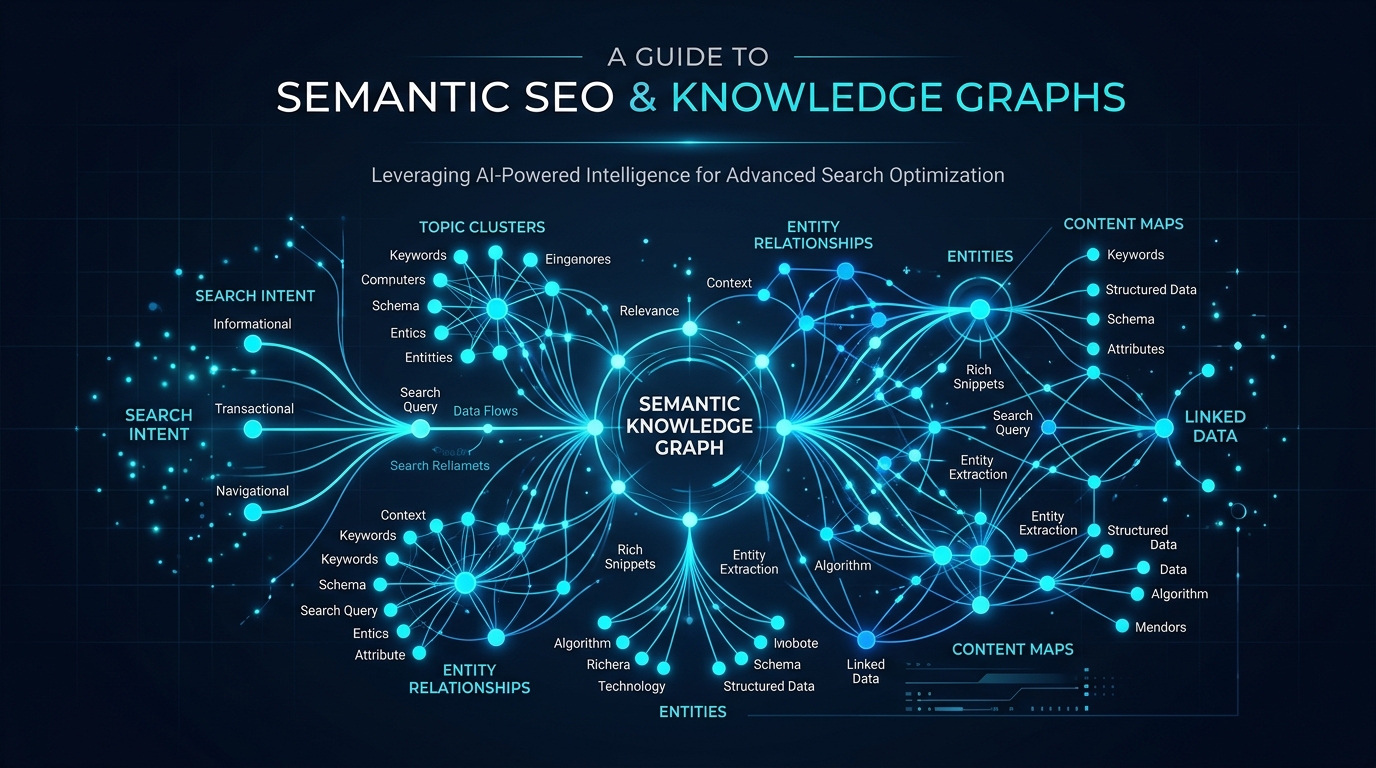
Semantic SEO focuses on the meaning and context behind a topic rather than repeating one exact keyword.
For an SEO services website, relevant terms and entities may include:
| Entity / Concept | Relevance to New Websites | Implementation Focus |
|---|---|---|
| Technical SEO | Ensures search engines can crawl, render, and index pages without errors. | XML sitemaps, robots.txt, canonical tags, HTTPS. |
| On-Page SEO | Communicates page relevance clearly to users and algorithms. | Title tags, meta descriptions, H1-H3 hierarchy, image alt text. |
| Topic Clusters | Organizes content into authoritative topic hubs rather than isolated posts. | Pillar pages linked to supporting cluster articles. |
| Local SEO | Captures high-intent regional searches in Google Maps 3-Pack. | Google Business Profile, NAP consistency, local reviews. |
| AI Search (GEO) | Formats knowledge so AI models (ChatGPT, Google AI Overviews) cite your brand. | Structured Q&A blocks, schema markup, entity mentions. |
| Core Web Vitals | Measures real-world user experience and loading performance. | LCP under 2.5s, CLS under 0.1, responsive mobile layouts. |
These related terms help explain a topic more completely when they are used naturally and accurately.
Important Rule: Do not force keywords into every sentence. Use them where they genuinely help the reader understand the subject.
3. Plan a Clear Website Structure
A well-organized website makes it easier for users and search engines to discover important pages.
Before publishing content, create a simple website structure that connects your main services, supporting information, and blog articles. For example, explore our deep-dive on topic clustering and website architecture.
For a service-based business, a basic structure could look like this:
Your most important service pages should be accessible through clear navigation and internal links.
For example, a blog post about local search optimization could link to your Local SEO guide. A technical SEO article could link to your Technical SEO service page.
This creates a useful connection between informational content and commercial pages. Avoid creating unnecessary pages simply to target slightly different keyword variations. Each page should have a clear purpose and provide distinct value.
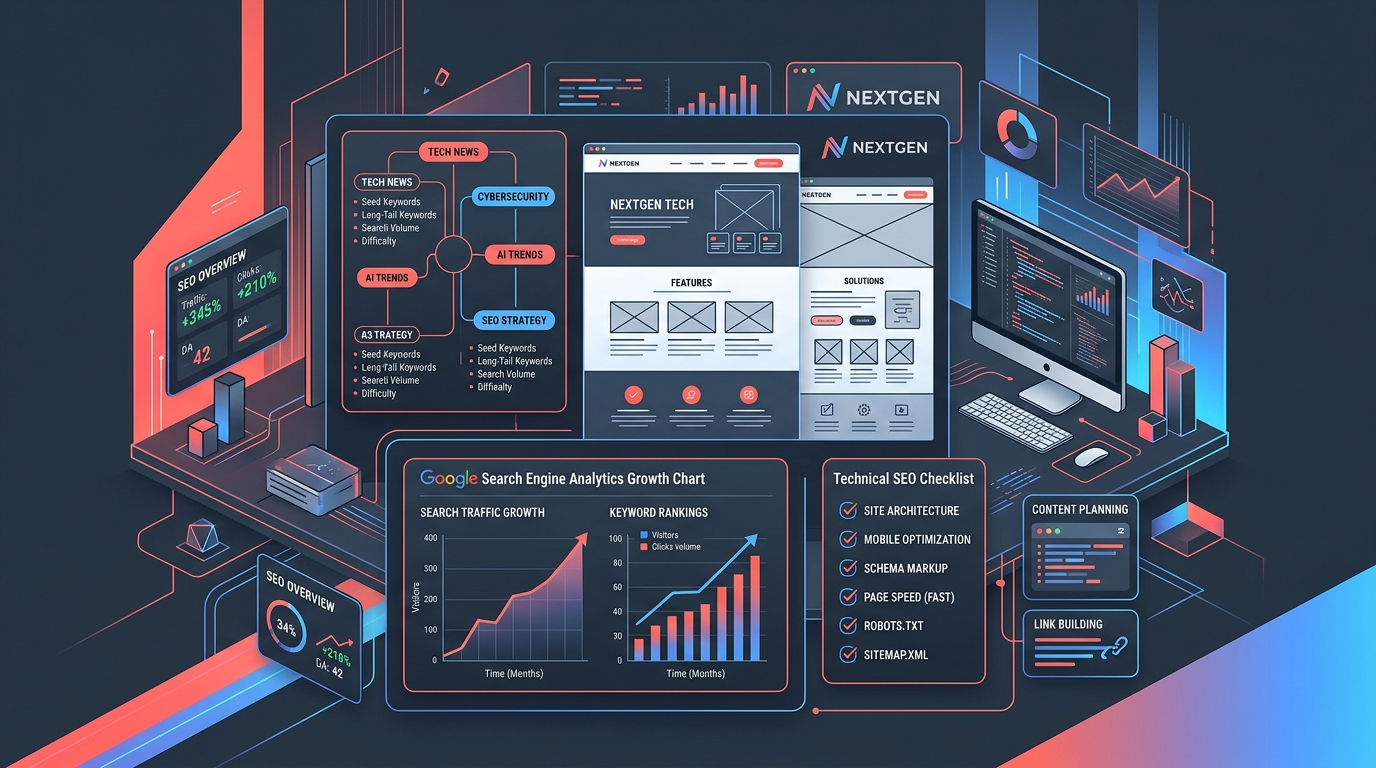
4. Set Up the Technical SEO Foundation
Technical SEO helps search engines crawl, understand, and potentially index your website.
A new website should be checked for technical issues before and after launch. Fixing these problems early can prevent unnecessary visibility and usability issues. Review our complete checklist in the Technical SEO Foundation Guide.
Important technical SEO tasks
Check website indexability: Make sure important pages are not accidentally blocked by a noindex directive or an incorrectly configured robots.txt file.
Create an XML sitemap: An XML sitemap helps search engines discover important URLs, especially on a brand-new website with few external backlinks.
Configure robots.txt: Use robots.txt to manage crawler access where appropriate. Do not block CSS, JavaScript, or resources that search engines need to render your layout.
Use canonical URLs: Canonical tags help indicate the preferred version of a page when duplicate URLs or tracking parameters exist.
Improve website speed: Check loading performance, especially on mobile devices. Large uncompressed images, unnecessary scripts, and render-blocking resources directly impair user experience.
Check mobile usability: Over 75% of searches in Kerala occur on smartphones. Your layout must be fluid, touch targets spacious, and font sizes easily readable on small screens.
Fix broken links: Review internal links and ensure that important navigation elements do not lead to 404 error pages or redirect chains.
Use HTTPS: Secure your website with HTTPS and ensure that all HTTP requests redirect automatically to the secure protocol.
Review JavaScript rendering: If your website uses modern JavaScript frameworks such as Next.js or React, ensure proper server-side rendering (SSR) or static site generation (SSG) so that crawlers can index the content without delay. If you need assistance building high-performance modern web apps, explore our website development services.
A technical SEO audit using tools such as Google Search Console, Screaming Frog, and PageSpeed Insights can help identify and resolve these issues prior to launch.
5. Optimize Important On-Page SEO Elements
Once the website structure and technical foundation are ready, focus on optimizing individual pages. Every important page should communicate its topic clearly to both users and search engines through disciplined on-page SEO optimization.
Page title
Create a unique and descriptive title for each page. Include the primary keyword naturally within 50–60 characters.
Example: SEO Expert in Kerala | Technical, Local and Content SEO Services
Meta description
Write a compelling description (140–155 characters) that explains what users can expect from the page. While not a direct ranking factor, a persuasive meta description improves click-through rate (CTR) from Google search results.
Example: “Looking for an SEO Expert in Kerala? Explore practical SEO services covering technical audits, keyword research, local Google Maps ranking, and content strategy.”
Main heading (H1)
Use a single, clear H1 that describes the main subject of the page. Avoid vague greetings like “Welcome to Our Website” that convey zero topical meaning to search engines.
Content structure
Organize content with logical H2 and H3 subheadings. Group related concepts together and answer questions in an intuitive sequence.
URL structure
Keep URLs short, readable, lowercase, and descriptive. For example, juvaidseo.com/technical-seo is far clearer than example.com/?service_id=8923.
Images and alt text
Use modern, compressed image formats (such as WebP or optimized JPEG) and provide descriptive alt text. Alt text should explain what the image depicts for visually impaired users and image search algorithms.
6. Create Helpful, Original Content
Content is an indispensable component of organic visibility, but publishing large volumes of superficial articles does not generate rankings.
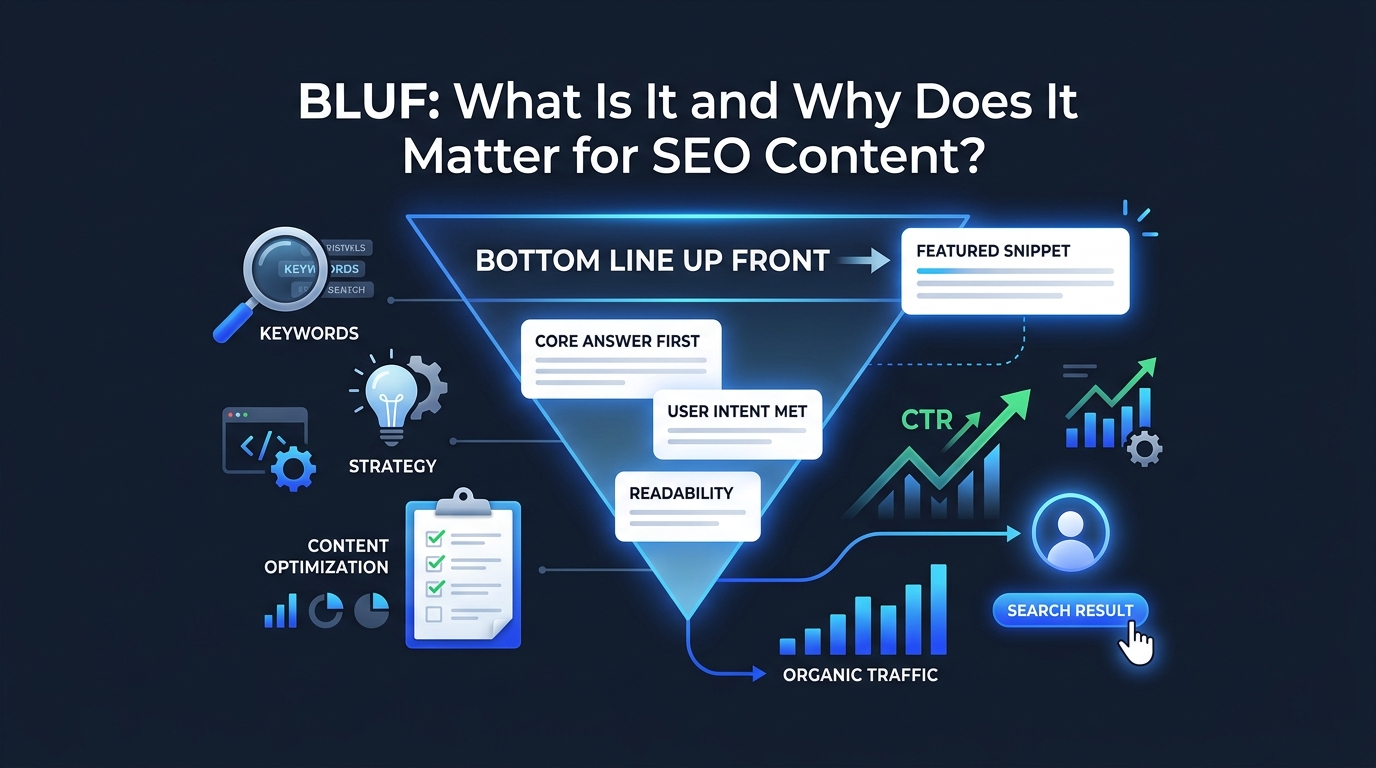
A new website should focus on content that answers real customer questions, solves tangible pain points, and demonstrates genuine industry knowledge. One effective way to satisfy search intent immediately is applying the BLUF (Bottom Line Up Front) content framework, presenting key takeaways at the top of the article.
For a business offering search optimization services, helpful content includes:
- How to build an SEO strategy for a new website
- Technical SEO issues that affect website visibility
- Local SEO tips for businesses in Kerala
- How to perform keyword research for a service business
- Common on-page SEO mistakes and how to fix them
- How to measure SEO performance using Google Search Console and GA4
- How internal linking supports website topical authority
- SEO audit checklist for small businesses
Add practical examples, original observations, real client data where appropriate, and explanations based on hands-on project experience. For example, in our Medline Academy Case Study, we shared verified GA4 proof showing how 2,220 WhatsApp leads were generated via organic search.
That kind of practical detail makes content substantially more authoritative than generic summaries.
7. Apply E-E-A-T Principles to Your Website
E-E-A-T stands for Experience, Expertise, Authoritativeness, and Trustworthiness.
These principles help evaluate whether a website provides reliable, credible information. Google explains that E-E-A-T is not a single direct ranking algorithm, but rather a benchmark that search quality raters use to evaluate helpful content.
Experience
Show evidence of real-world work. For an SEO specialist, this includes publishing detailed SEO case studies, before-and-after search performance data, and practical walkthroughs of complex technical tasks.
Expertise
Demonstrate deep domain mastery through accurate, insightful content. Strengthen your domain by featuring an author bio, detailing your professional certifications, and maintaining technical accuracy.
Authoritativeness
Build recognition through meaningful work, industry citations, and editorial backlinks. Contributing original research and publishing comprehensive guides elevates your standing within your industry.
Trustworthiness
Ensure transparency across your digital touchpoints. Provide clear service descriptions, publish an About page, include transparent contact information, and set honest client expectations regarding SEO timelines.
Never promise guaranteed #1 rankings on Google. Organic rankings depend on competitive dynamics, search demand, technical health, and algorithm updates. A legitimate SEO specialist focuses on measurable visibility, qualified traffic, and compounding business leads.
8. Build a Local SEO Strategy for Kerala Businesses
If your business serves customers in a specific geographic location, local SEO is the fastest route to capturing qualified inquiries.
For service providers and local enterprises targeting Kerala, local search optimization is vital for attracting clients from commercial hubs such as Calicut (Kozhikode), Kochi, Kannur, and Thrissur.
Key local SEO activities
Optimize your Google Business Profile: Claim and verify your profile. Choose the exact primary category, list specific services, upload real workplace photos, and maintain up-to-date business hours. Read our detailed guide on Google Business Profile optimization.
Create useful location pages: If you serve multiple cities across Kerala, develop genuine, localized pages explaining your regional projects and client success stories. Avoid copy-pasting identical content with only the city name swapped.
Maintain consistent NAP information: Ensure your business Name, Address, and Phone number are identical across your website footer, Google profile, and local directories.
Collect authentic customer reviews: Encourage satisfied customers to leave honest feedback detailing the specific service they received. Respond professionally to all reviews.
Publish locally relevant content: Address the specific questions and market conditions of Kerala businesses to establish geographic relevance.
9. Use Internal Linking to Connect Relevant Content
Internal links connect one page of your website to another page on the same domain.
They help users navigate your content seamlessly, distribute link equity (PageRank) throughout your site, and help search engine crawlers understand semantic relationships between pages. Learn how to architect these pathways in our guide to topic clustering and internal linking.
For example, an article about keyword research can link naturally to:
- Your SEO services page
- Your technical SEO consulting page
- An article on on-page optimization
- A relevant SEO case study
Always use descriptive anchor text that tells visitors and search bots exactly what they will find after clicking. Avoid generic text such as “click here” or “read more.”
10. Set Up Google Search Console and Analytics
You cannot optimize what you do not measure. Immediately upon launch, configure professional tracking to monitor how visitors discover and interact with your website.
Google Search Console (GSC)
GSC is essential for monitoring organic search visibility. Use it to track:
- Search queries driving impressions and clicks
- Average search positions across keywords
- Index coverage and crawl errors
- Sitemap submission and verification
- Core Web Vitals and mobile usability reports
Google Analytics 4 (GA4)
GA4 tracks post-click user engagement and conversions. Key events to configure include:
- Organic landing page sessions and engagement duration
- Contact form submissions and lead inquiries
- WhatsApp click events and phone calls
- Brochure and resource downloads
As demonstrated in our Medline Academy performance analysis, organic visitors often spend 28x more time engaging with detailed content than fleeting social ad traffic, making organic leads substantially more valuable.
11. Earn Relevant Backlinks Naturally
Backlinks remain one of Google's most significant authority signals. A backlink is a vote of confidence from another website indicating that your content is credible and worth referencing.
However, link acquisition should focus strictly on editorial relevance and domain quality rather than sheer quantity. Sustainable methods include:
- Publishing original research, industry surveys, or detailed data breakdowns
- Creating comprehensive, definitive guides that industry peers naturally reference
- Publishing transparent, documented case studies
- Contributing expert insights and commentary to reputable industry publications
- Building organic partnerships with local business communities in Kerala
Avoid buying low-quality backlink packages, directory spam, or automated link schemes that risk triggering algorithmic or manual penalties.
12. Create a Realistic SEO Timeline
SEO is a compounding, medium-to-long-term investment. A brand-new domain requires time to be discovered, crawled, indexed, and evaluated for trustworthiness.
| Timeline Phase | Core Objectives | Expected Milestones |
|---|---|---|
| Month 1: Setup & Audit | Keyword research, site architecture, technical SEO audit, GSC/GA4 setup. | Clean indexation, XML sitemap verified, zero crawl errors. |
| Month 2: Content & On-Page | Service page optimization, launch of initial topic cluster guides, internal linking. | Initial impressions recorded for long-tail search queries. |
| Month 3+: Growth & Scaling | Content expansion, local Google Maps optimization, conversion rate optimization. | First-page rankings for low/medium difficulty keywords, steady organic inquiries. |
Every website progresses at a different pace depending on competition, content depth, and domain authority. Consistency and technical rigor are the true drivers of sustainable growth.
13. Avoid Common SEO Mistakes on New Websites
Many new website launches fail to gain traction because of avoidable oversights:
- Launching without pre-launch technical checks: Leaving
noindextags active or blocking search bots in robots.txt. - Keyword cannibalization: Creating multiple pages targeting the exact same query, causing them to compete against each other.
- Publishing thin location pages: Generating automated doorway pages with zero unique local value.
- Ignoring mobile performance: Designing solely for desktop displays while neglecting mobile Core Web Vitals.
- Expecting instant overnight rankings: Abandoning the organic roadmap after a few weeks rather than allowing topical authority to compound.
Final Thoughts
Building an SEO strategy for a new website requires more than adding keywords to a homepage. It starts with understanding the business, researching search intent, creating a clear website structure, and making sure search engines can discover and understand the content.
From technical SEO and on-page optimization to local search, content development, and performance tracking, every part of the strategy should work toward the same goal: helping the right audience find useful information and take meaningful action.
If you are launching a new website or looking to scale your organic presence, an experienced SEO Expert in Kerala can help you identify opportunities, prioritize technical improvements, and execute a data-backed search roadmap. You can also consult directly with Juwaid KV to review your website architecture.
The best SEO strategy is not the one that promises instant rankings. It is the one that builds a useful, trustworthy website and improves its visibility through consistent, measurable work. Ready to launch your organic growth? Book a free SEO strategy consultation today.
Frequently Asked Questions
How long does it take for a new website to rank on Google?
There is no fixed timeline. Google discovers and indexes pages at varying speeds. Meaningful search visibility for low-competition terms often appears within 6 to 12 weeks, while competitive commercial keywords generally require 3 to 6 months of continuous optimization.
What is the first step in an SEO strategy for a new website?
The first step is clarifying business objectives and customer search intent. After defining your audience, conduct keyword research and plan a logical site architecture connecting service pages and supporting topic clusters.
Is keyword research necessary for a new website?
Yes. Keyword research reveals the exact terminology and questions potential customers use. Without it, you risk creating content that fails to match what users are actually searching for.
Can an SEO Expert in Kerala help businesses outside Kerala?
Yes. SEO strategies apply across global markets. An experienced consultant can execute regional local SEO, national campaigns across India, or international SEO targeting markets like the UAE and Middle East.
Does publishing more blog posts guarantee better rankings?
No. Quality, depth, and relevance are far more decisive than sheer volume. A few authoritative, well-researched guides that answer questions thoroughly will consistently outperform dozens of thin, generic articles.
What tools are useful for a new website SEO audit?
Essential tools include Google Search Console, Google Analytics 4, Screaming Frog SEO Spider, PageSpeed Insights, and keyword research suites such as Ahrefs or Semrush.