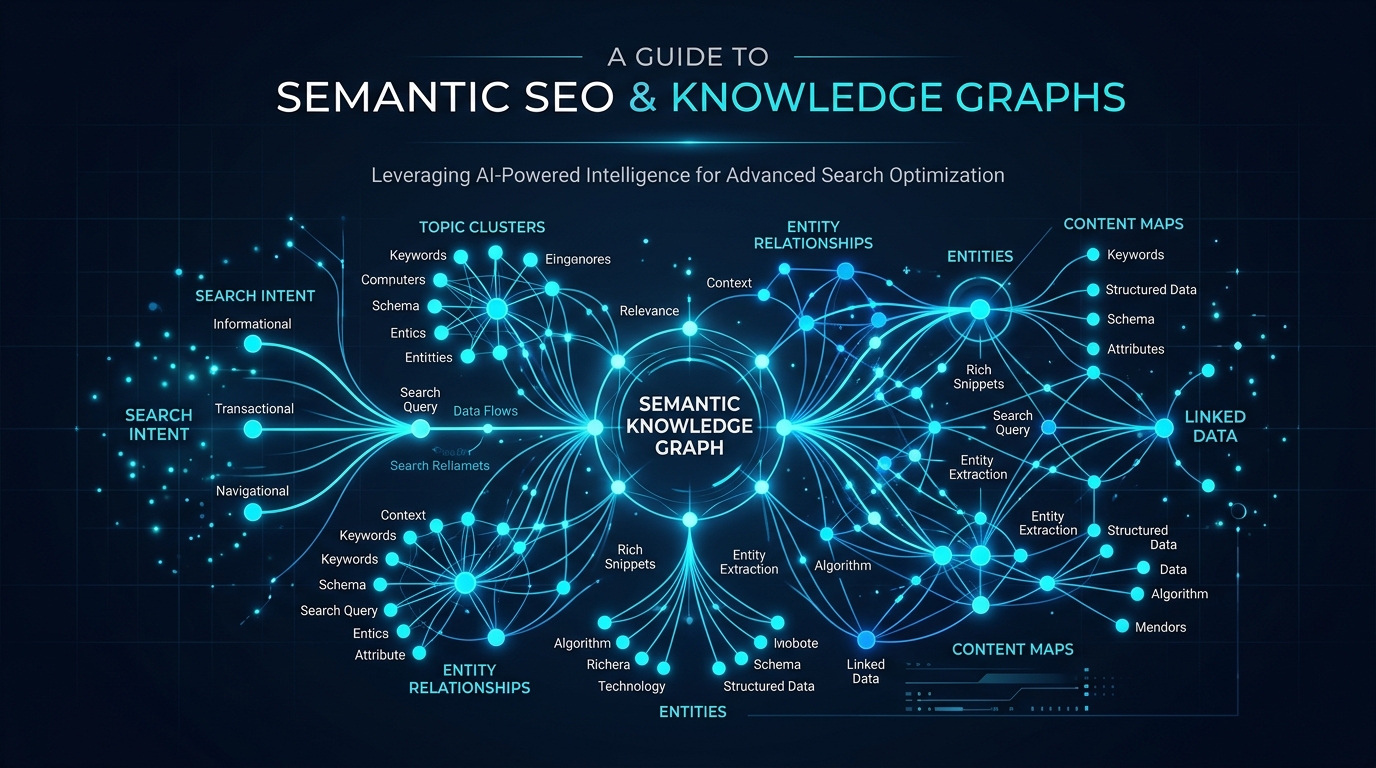
Semantic SEO is the process of creating and optimizing content so that search engines can understand its meaning, context, and relationship to a particular topic.
Traditional SEO often focused heavily on matching exact keywords. Semantic SEO takes a broader approach. Instead of simply repeating a target phrase, it helps search engines understand what a page is about, which questions it answers, and how its information connects to related concepts.
For example, a page about digital marketing may naturally discuss search engine optimization, content marketing, social media marketing, conversion rates, keyword research, and online advertising. These related concepts help establish the subject of the page without repeatedly using the same keyword.
Google uses systems designed to understand language, meaning, and search intent. Creating useful, well-organized content gives these systems better context for interpreting a website.
Why Is Semantic SEO Important?
People do not always search using the exact words found on a website. They may use synonyms, conversational phrases, questions, or different expressions that refer to the same idea.
Someone looking for information about improving website speed might search for:
- How to make a website load faster
- Website performance optimization
- Improve page loading time
- Core Web Vitals
- Reduce website loading delays
Although these queries use different wording, they can reflect a similar underlying need.
Semantic SEO helps businesses create content that addresses the broader topic rather than targeting only one phrase. This can improve a page’s ability to serve different relevant searches, although there is no guarantee that semantic optimization alone will increase rankings.
Benefits of semantic SEO include:
- Better alignment with search intent
- Clearer content structure
- More comprehensive topic coverage
- Improved connections between related pages
- A stronger foundation for topical authority
- Better readability and user experience
- More context for search engines and AI-powered search systems
The main goal is not to include as many related keywords as possible. It is to provide the most useful and relevant information for the reader.
How Does Google Understand Content Semantically?
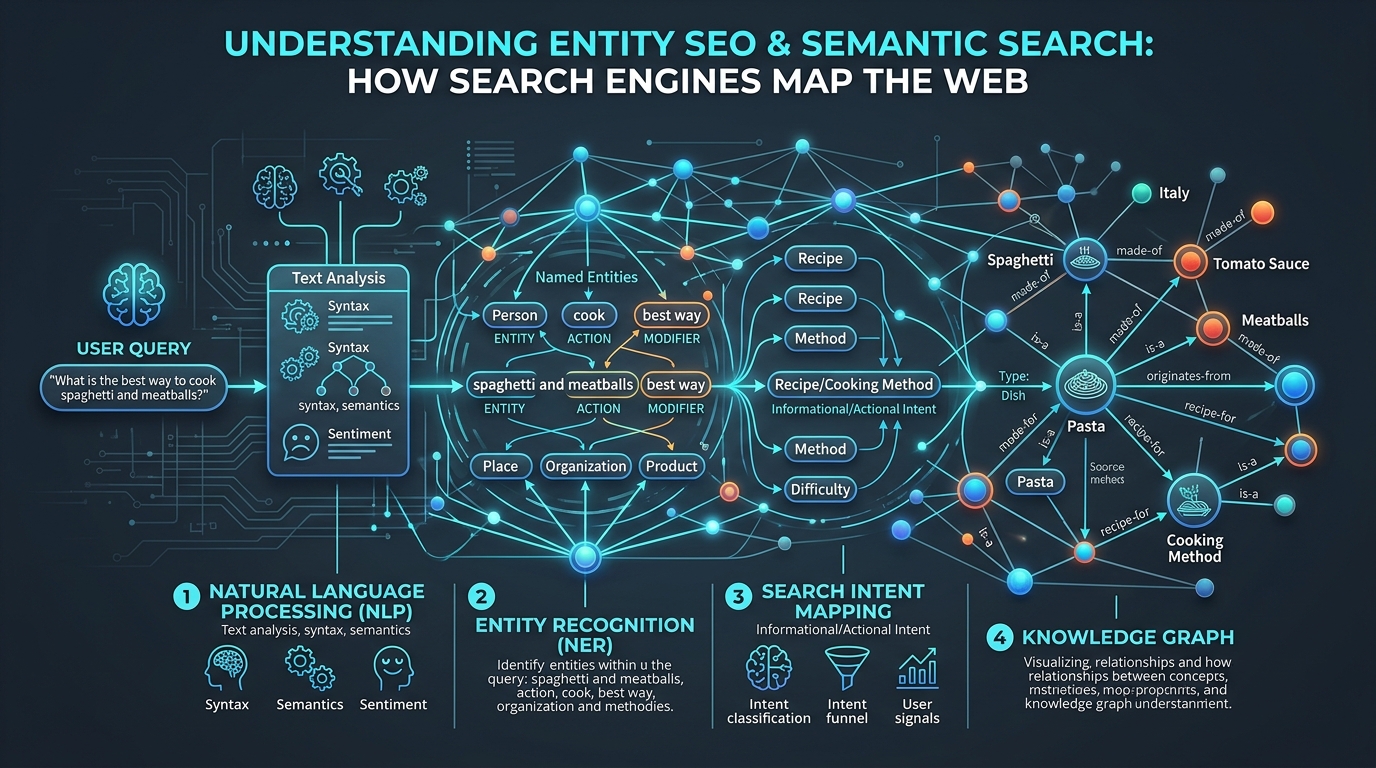
Google uses several language-understanding and search-ranking systems to interpret content. These systems help connect words and phrases with their meanings, concepts, and relationships.
1. Natural Language Processing
Natural language processing, or NLP, is a field of artificial intelligence that helps computers interpret human language.
In search, language understanding can help identify the meaning behind a query. For instance, a search for “best places to visit near Calicut” may be understood as a request for travel recommendations around Kozhikode, Kerala.
Search engines can analyze the words in a query and consider their context. This is why a page does not necessarily need to contain the exact wording of every possible search query to be relevant.
2. Search Intent
Search intent refers to the reason behind a search.
A person searching for “what is technical SEO” probably wants an explanation. Someone searching for “SEO services in Calicut” may be comparing service providers. Another person searching for “buy running shoes online” is more likely looking for products.
Understanding these differences helps you create content that meets the visitor’s expectations.
The four commonly discussed types of search intent are:
| Search intent | Example query | Suitable content |
|---|---|---|
| Informational | What is semantic SEO? | Guide or educational blog |
| Navigational | Google Search Console | Official website or resource |
| Commercial investigation | Best SEO expert in Calicut | Comparison or service guide |
| Transactional | Hire an SEO consultant in Calicut | Service page or contact page |
A semantically optimized article should answer the questions users are genuinely trying to solve.
3. Entities and Their Relationships
An entity is a distinct, identifiable person, place, organization, concept, product, or other thing.
For example, an article about SEO may mention:
- Google Search
- Google Search Console
- Google Business Profile
- Keyword research
- Technical SEO
- Content marketing
- Calicut, also known as Kozhikode
- Kerala
- Search engine optimization
These entities are connected through meaningful relationships. Google Search Console is associated with website performance monitoring, while Google Business Profile is associated with local business visibility.
When a page explains these relationships clearly, it provides useful context to both readers and search engines.
Semantic Keywords: What Are They?
Semantic keywords are words and phrases that are closely related to the main subject of a page. They may be synonyms, subtopics, related concepts, attributes, or phrases commonly associated with the topic.
For a page targeting Semantic SEO, relevant concepts may include:
- Semantic search
- Search intent
- Topic relevance
- Content context
- Entity SEO
- Topic clusters
- Topical authority
- Natural language processing
- Knowledge Graph
- Internal linking
- Structured data
- On-page SEO
- Content depth
- User experience
These terms should appear only where they make sense.
For example, a section explaining topic clusters can naturally mention pillar pages, supporting articles, internal links, and related search queries. A section about structured data can discuss schema markup and how it helps communicate information about a page.
There is no fixed number of semantic keywords that every article must contain. Relevance and usefulness matter more than keyword count.
Semantic SEO vs Keyword Stuffing
Keyword stuffing is the practice of excessively repeating keywords in an attempt to manipulate search rankings. It can make content difficult to read and may violate Google’s spam policies when used manipulatively.
Consider these two examples:
Poor example
Semantic SEO is important because semantic SEO helps semantic SEO improve semantic SEO rankings. If you need semantic SEO, our semantic SEO services can help with semantic SEO.
This text repeats the same phrase without adding useful information.
Better example
Semantic SEO helps search engines understand the broader meaning of a webpage. By covering related concepts such as search intent, topic relevance, and content structure, businesses can create more useful resources for their audience.
The second example communicates the topic clearly and uses related concepts naturally.
The objective is to explain the subject thoroughly, not to force every related keyword into the article.
How to Implement Semantic SEO on Your Website
1. Identify the Main Topic
Start by deciding exactly what your page should explain.
If your target topic is semantic SEO, determine whether the article is intended for beginners, experienced marketers, business owners, or SEO professionals.
A clearly defined subject helps prevent the content from becoming too broad or unfocused.
2. Understand the Search Intent
Research what people expect to learn when they search for your topic.
For “semantic SEO,” users may want to know:
- What semantic SEO means
- How it differs from traditional keyword optimization
- How semantic keywords work
- How entities influence search understanding
- How to improve content relevance
- Whether semantic SEO helps organic rankings
Answering these questions can make the article more useful than a short definition alone.
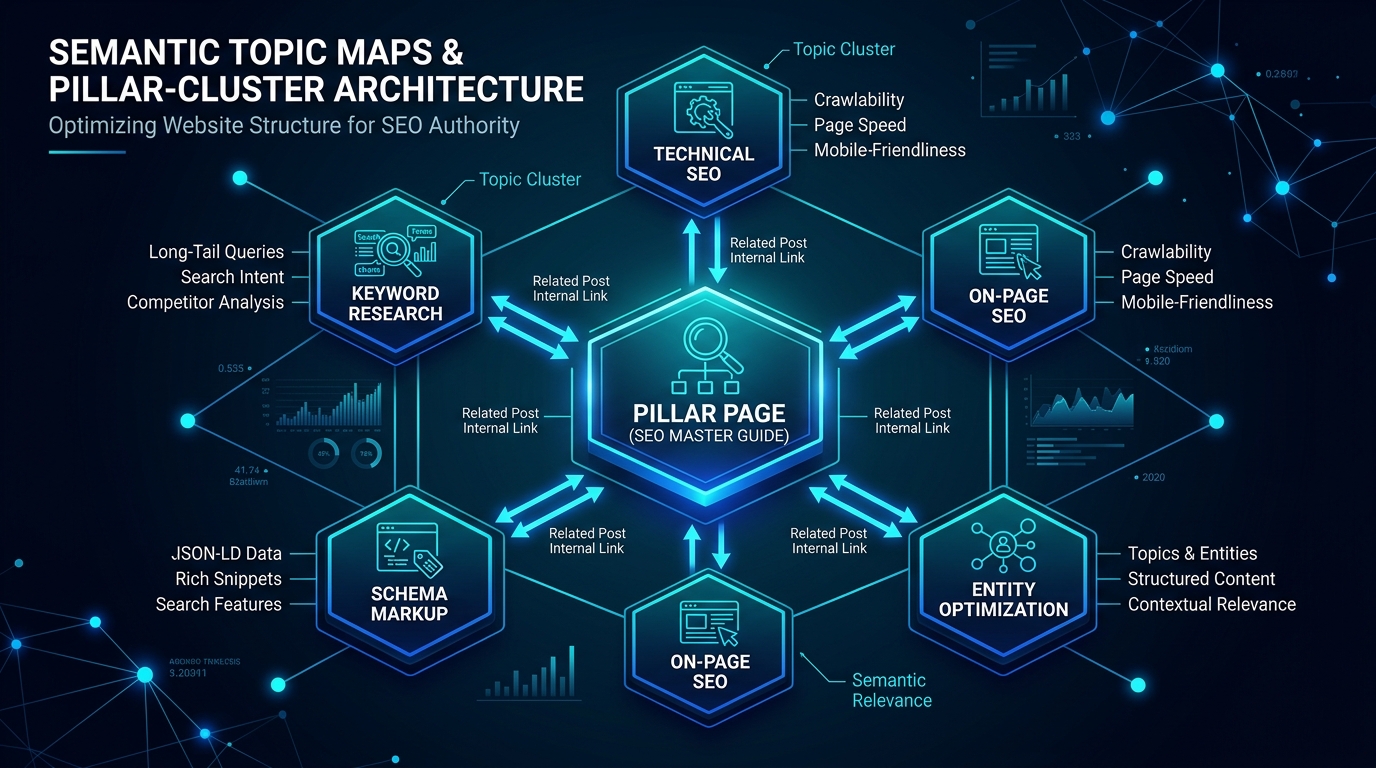
3. Build a Topic Map
A topic map organizes the main subject into connected subtopics.
For a semantic SEO guide, a topic map might look like this:
Main topic: Semantic SEO
Supporting topics:
- Semantic search
- Search intent
- Semantic keywords
- Entity SEO
- Topic clusters
- Internal linking
- Structured data
- Topical authority
- Content quality (BLUF framework)
- SEO measurement
This structure helps you identify information gaps and decide which concepts deserve their own sections.
4. Use Related Concepts Naturally
Instead of creating separate paragraphs for every keyword, explain related ideas where they are relevant.
For example, when discussing semantic search, you can explain how search engines interpret meaning and context. When discussing entity SEO, you can explain how identifiable concepts and relationships help describe a topic.
Use variations in wording where they improve clarity. There is no need to replace every instance of a keyword with a synonym.
5. Organize Content With Clear Headings
A logical heading structure makes long-form content easier to navigate.
For example:
- What Is Semantic SEO?
- Why Is Semantic SEO Important?
- How Does Google Understand Content?
- What Are Semantic Keywords?
- How to Implement Semantic SEO
- Common Mistakes to Avoid
- How to Measure Semantic SEO Performance
Each heading should introduce a meaningful section rather than exist only to accommodate another keyword.
6. Strengthen Internal Linking
Internal links connect one page of your website to another page on the same domain.
Suppose you publish a guide about semantic SEO. You may link naturally to related resources about:
- Keyword research
- Technical SEO
- On-page SEO
- Local SEO in Calicut
- Content strategy
- Google Search Console
These links help users discover additional information and can help search engines discover and understand the relationships among pages on your website.
Use descriptive anchor text that accurately explains the destination page.
7. Use Structured Data Where Appropriate
Structured data is a standardized way of providing information about a webpage to search engines.
Schema.org vocabulary can describe entities and content types such as:
- Articles
- Organizations
- Local businesses
- Products
- Events
- FAQs, where appropriate
For example, a local business website may use relevant Organization or LocalBusiness structured data to communicate information about the business.
Structured data does not automatically improve rankings, and not every page qualifies for a rich result. It should accurately represent visible, relevant information on the page and follow Google’s guidelines.
8. Demonstrate First-Hand Knowledge and Expertise
High-quality content should provide useful information, accurate explanations, and relevant examples.
For business websites, this may include:
- Original case studies
- Practical recommendations
- Clear service descriptions
- Relevant experience
- Accurate business information
- Evidence supporting important claims
If you are writing about SEO services in Calicut, for example, explaining how local businesses can improve their online visibility is more valuable than repeating the location name throughout the article.
Semantic SEO for Local Businesses
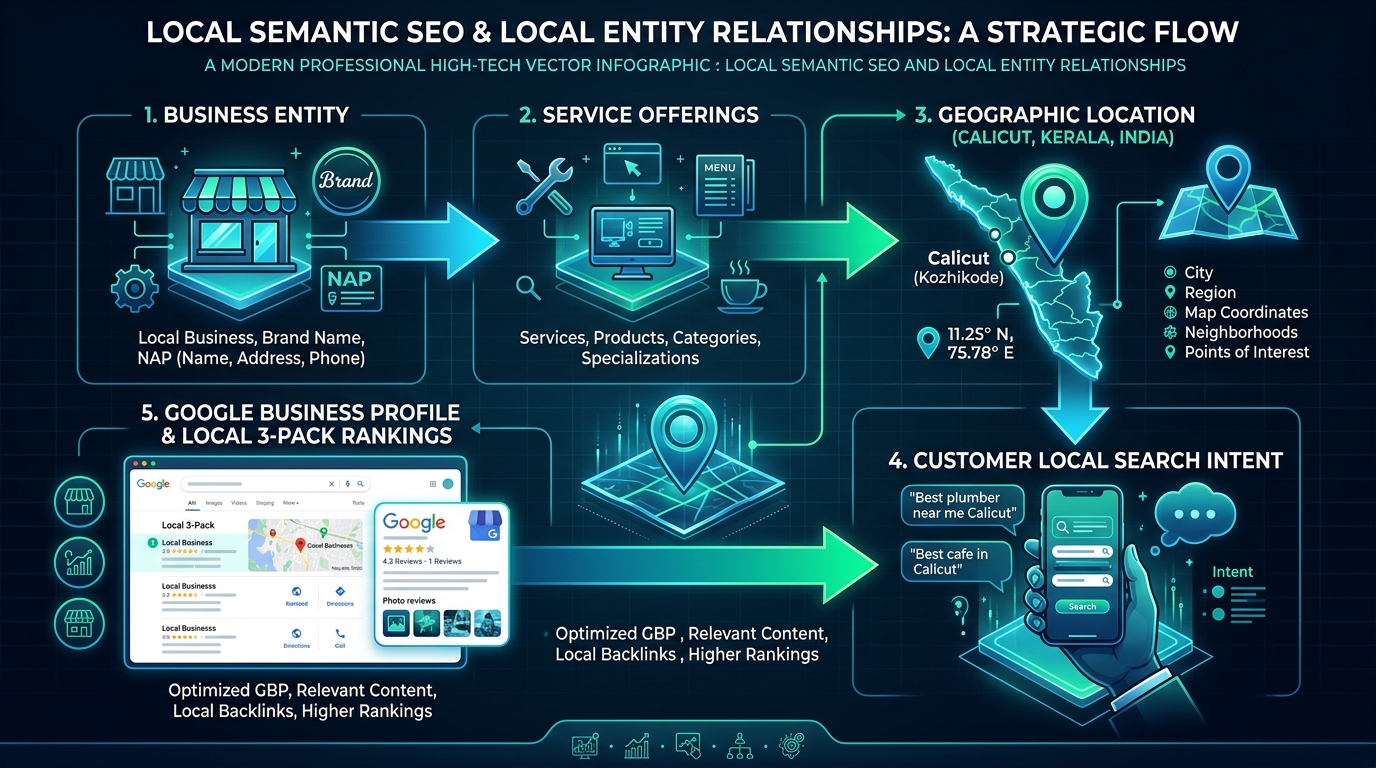
Semantic SEO is particularly useful when creating content for a specific service area.
Consider a business offering SEO services in Calicut. A well-developed local SEO strategy should explain the services, the target audience, and the geographic context.
A relevant service page or blog may naturally discuss:
- Local search visibility
- Google Business Profile
- Google Maps
- Website optimization
- Local search intent
- Business reviews
- Location-based queries
- Organic traffic
- Lead generation
- SEO reporting
A page for an SEO expert in Calicut should clearly explain who the service is for, what problems it solves, and how potential clients can get started.
For example:
Businesses in Calicut, including shops, clinics, educational institutions, restaurants, and professional service providers, may benefit from a well-planned local SEO strategy. An SEO expert in Calicut can help businesses evaluate their website, improve relevant content, address technical issues, and build a stronger local search presence.
The location should be included because it is relevant to the service—not because it needs to appear in every sentence. For enterprise businesses in central Kerala, the same principle applies when working with an SEO expert in Kochi.
Semantic SEO and Local Entity Relationships
Local search content can involve several connected entities:
Business → Service → Location → Customer need
For example:
Juwaid SEO → Search engine optimization → Calicut, Kerala → Improve online visibility
A website can make these relationships clearer through consistent business information, well-written service pages, relevant location details, and accurate structured data.
However, simply mentioning a business name, city, or service does not guarantee a particular Google ranking.
Semantic SEO and Entity SEO: What Is the Difference?
Semantic SEO focuses on meaning, context, and relationships between concepts within content.
Entity SEO focuses more specifically on helping search engines understand identifiable entities and their connections.
These approaches overlap.
For example, an article about a digital marketing agency may discuss its services, location, team, business name, and industry. Clear content helps explain the meaning of the page, while accurate business information and appropriate structured data can help communicate details about the organization.
Key differences
| Semantic SEO | Entity SEO |
|---|---|
| Focuses on meaning and context | Focuses on identifiable entities and relationships |
| Covers related topics and concepts | Describes people, organizations, places, products, and more |
| Helps align content with search intent | Helps clarify what a page or business represents |
| Uses natural language and topic structure | May use consistent entity information and structured data |
| Supports comprehensive content | Supports clearer descriptions of entities |
Neither approach replaces technical SEO, useful content, relevant backlinks, or other factors that influence search performance.
Common Semantic SEO Mistakes to Avoid
1. Adding Unrelated Keywords
Do not include terms simply because they appear in a keyword research tool. Every phrase should serve a purpose for the reader.
2. Writing About Too Many Topics
A page that tries to cover SEO, web design, social media, email marketing, and paid advertising equally may lack a clear focus.
Keep the main topic central and link to detailed resources when appropriate.
3. Repeating Synonyms Excessively
Using multiple variations of the same keyword in every paragraph does not automatically make content more semantic. Natural language is more effective than forced repetition.
4. Creating Thin Supporting Pages
Topic clusters work best when each page offers genuine value. Publishing several short pages that say almost the same thing can create unnecessary duplication.
5. Ignoring Technical SEO
Semantic optimization cannot compensate for serious technical problems such as inaccessible pages, incorrect canonicalization, or blocked important resources. Review our Technical SEO guide to avoid crawl traps.
A complete SEO strategy should address both content and technical performance.
6. Treating Structured Data as a Ranking Shortcut
Schema markup helps communicate information, but it is not a guarantee of better rankings or rich results.
How to Measure the Results of Semantic SEO
Semantic SEO is not measured by a single dedicated score in Google Search Console. Instead, evaluate how well your content performs for relevant searches and whether it meets business goals.
Useful metrics include:
- Organic search impressions
- Organic clicks
- Click-through rate
- Average position
- Relevant keyword visibility
- Engagement and conversions
- Leads generated through organic search
- Performance of related pages within a topic cluster
Google Search Console can help you identify the queries that show your pages in search results. Reviewing these queries may reveal opportunities to improve content, answer additional questions, or create useful supporting resources.
Google Analytics 4 or another analytics platform can help evaluate user behavior and conversions.
Focus on qualified traffic and meaningful business outcomes rather than chasing a higher keyword count.
Frequently Asked Questions
Does semantic SEO replace traditional SEO?
No. Semantic SEO complements traditional SEO practices. Technical SEO, relevant content, internal linking, crawlability, and other established practices remain important.
Are semantic keywords the same as LSI keywords?
Not exactly. “LSI keywords” is often used in SEO discussions to describe related terms, but latent semantic indexing is a specific information-retrieval technique. Google has not stated that adding so-called LSI keywords is a required SEO practice. It is more accurate to discuss related concepts, topic relevance, and search intent.
How many semantic keywords should I use in an article?
There is no universal ideal number. Include relevant terms when they help explain the subject. Avoid adding keywords that make the writing unnatural or distract from the reader’s question.
Does semantic SEO help with AI search visibility?
Clear, accurate, well-structured content can help search systems interpret information. However, semantic SEO does not guarantee that a website will be cited or recommended by ChatGPT, Google AI features, or other AI-powered search systems.
Is semantic SEO useful for small businesses?
Yes. Small businesses can use it to create helpful service pages, location-specific content, educational resources, and internally connected topic clusters. The strategy should reflect the business’s actual services and the needs of its customers.
Final Thoughts
Semantic SEO is about helping search engines and users understand the complete meaning of your content. Rather than focusing exclusively on exact-match keywords, it encourages clear explanations, relevant concepts, useful internal links, and a logical content structure.
A successful approach starts with search intent, develops a focused topic, and covers related questions naturally. When combined with technical SEO, quality content, and a clear business strategy, semantic optimization can support a stronger and more useful website.
If you are a business owner looking to improve your website’s visibility in Calicut or across Kerala, working with an experienced SEO expert in Calicut or consulting with Juwaid KV can help you identify content opportunities, improve website structure, and develop a practical search optimization strategy.
The most important principle is simple: Create content that genuinely answers the user’s question, and make the meaning of your website clear. If you need a comprehensive audit or hands-on implementation, request an SEO strategy consultation today.